Tuesday, October 18, 2011

Gilad Shalit Returns Home--גלעד שליט חוזר הביתה


What a day to be in Israel. I spent nearly 8 straight hours glued to the news.

As I sat in my cousin’s salon, I was transfixed, staring at the tv with countless clients, stylists, and passersby. There were moments where people cheered, and moments where everyone was silent. The moment that the headline changed to “Gilad b’yisrael’’ (גלעד בישראל=Gilad is in Israel) though, everyone just got chills.

How many times today did I watch footage of Gilad in Egyptian hands? How many times did I watch him struggle to walk down two stairs? How many times did I wonder how he got those glasses? How many times did my heart ache as I watched footage of Israelis watching footage of Gilad’s return? How many Gilad-related commercials were aired between quickly assembled montages of Gilad walking/blinking/just simply existing? How many times did I hear the news in Hebrew, to the point where I not only understood what they were saying but could accurately recite it back to you? How many times did I get butterflies in my stomach thinking about his reunion with his parents? How much did I kvell when he put his hand over his heart in the van on his way to his house, clearly touched and overwhelmed by the people/Israeli flags/flowers/support? How many tears did I shed when they showed those 3 year olds saying “gilad shalit chozer habayta!” (גלעד שליט חוזר הביתה=Gilad Shalit is returning home)? How many times did I almost giggle when Gilad went from saluting Bibi (Benjamin Netanyahu, the Israeli Prime Minister) to embracing him in a Voldemort—Malfoy style hug? How many times did I smile proudly hearing Bibi reference biblical passages in a modern context?

The fact is, the reunion with his parents was lukewarm at best and that initial interview was an absolute disaster.

But actually that doesn’t matter.

And today is not about how many times I did anything in the above list.

What matters as of this moment is that Gilad Shalit is home. He’s sitting in his house with [most of] his family, and he is back in Israel, no longer a prisoner of Hamas.

The fact of the matter is that yes, Gilad returned to Israel—but at a steep price. 1,027 prisoners were released so that he could come back. On the news, the excitement of the Israeli people was absolutely palpable. However, so was the enthusiasm of the 500,000 Palestinians who rallied with joy and excitement. Among those released were people who were involved in some of the most devastating attacks of the intifadas, and their lack of remorse is frightening. As Israelis chanted “Am Yisrael Chai” (עם ישראל חי=The People of Israel Live) and “Gilad Shalit Chozer Habayta” (גלעד שליט חוזר הביתה=Gilad Shalit is returning home) some of the Palestinians chanted “We want a new Shalit.” This, to me, is horrifying. The thought of over 1000 terrorists being released back into the wild (Gaza, Egypt, Turkey, East Jerusalem, etc), when combined with the statistic provided by Time.com, “Israeli officials calculate that 60% of those released resume terrorism attacks. ” http://www.time.com/time/world/article/0,8599,2097192,00.html

So while I, alongside the Israelis who have missed him like they would their own brother, son, or nephew, I am thrilled to know that Gilad Shalit is back at his own dinner table as we head into Simchat Torah. I love knowing that, after 1,940 days in captivity, Gilad is now a free man. But I also recognize the bittersweetness of this day. Am Yisrael, the people of Israel, can feel fuller, more complete, once again whole. However, it is important to remember that that feeling has a cost, and that cost is a dangerous one.

Today was absolutely an information overload, and I feel the barrage of the images I saw and the words I heard time and time again. I remember losing it when I first saw the picture of Gilad and his father embracing with Bibi totally cheesing in the background (above--photo credit to Moshe Milner, GPO); Netanyahu knows what it means to lose someone, and this is absolutely a personal victory for him, today. I remember tearing up the first time I heard the brand new Arik Einstein song, written in the last 48 hours in honor of Gilad’s release (music and lyrics here--the site is in Hebrew, but it's worth listening to). I remember the delight on children’s faces (who couldn’t have been born at the time of Gilad’s capture) cheering alongside friends and family for the homecoming of this lost (misplaced?) soldier. I also remember being in Israel with my family in June and July of 2006. In the end, today was about a homecoming, not about terrorism.

I’m not a cynical person, but I think, realistically, this celebration needs to be taken with a grain of salt. Yes, we should all feel relieved that Gilad is home; what a blessing for him and his family! We also need to be aware of the cost of his homecoming, and hope that, in the end, it was worth it. Who knows, maybe the 60% statistic provided by Israeli officials is inaccurate for this particular batch? Maybe the sense of warmth and completeness that comes with the return of one (or one thousand) members of your community is enough to keep people feeling peaceful and well-wishing other members of humanity for at least the time being?

Only time will tell. I’m hoping for the best. Like I said, today was a bit overwhelming; maybe my opinion will change as the situation develops and time moves forward. For now, though, I’m so relieved and happy that Gilad is home, and I feel so lucky to have been in a situation where I could experience this momentous and joyous event in the country where it was happening.

As Bibi said this afternoon, today it is possible to say that the people of Israel live.

היום אפשר לומר שעם ישראל חי.

Welcome home, Gilad. ברוך הבא, גלעד.

Sunday, October 16, 2011

Random Excursions

Wait, you mean there's more to this time of year than holidays?

We're going a wee bit out of order here, but here are some things that happened either before the holidays or between Rosh Hashanah and Yom Kippur.

And also, I would like to thank all of you for reading---the blog already has more than 3000 views and I simply can't believe it. So thank you.

Alright! Let's get to the good stuff.

One key highlight to note is that the weather has finally started to change. We're getting clouds now (which makes my photography much more interesting and the periodic shade is helping the temperature feel lower even on days when it's not) so that's awesome.

Jaffa Gate at night

Since the weather has been so pleasant, it's hard not to want to be outside all the time. However, since I'm in school from 830 until 1600 or so, depending on the day, it's been hard to get outside. One night, Jessie and I took our fancypants cameras and some tripods out to Yemin Moshe, where we like to do havdallah, and we just spent some time taking pictures of the walls around the Old City. It was sooo fun, and it was a great break from being inside. The religious in Israel make the daylight savings time change in between the High Holy Days so that the day of the fast on Yom Kippur is shorter, so now it's dark around 6 and we're only 6 hours ahead of EST until they have their time change next month. It's crazy!

View of Abu Tor from Yemin Moshe

With Israel seminar we took a trip to Yad Vashem and Har Herzl recently. I went to Yad Vashem over Ulpan Break (read about that excursion here) but it is always a meaningful and interesting trip. This time, we spent about an hour in the Valley of the Communities with our teacher Jeremy, and we talked about the impact that such an exhibit can have on the collective memory of a people.


The whole day was dedicated to studying/examining collective memory and civil religion and statism. After an interesting experience with the security at Yad Vashem (5 or more people walking into the museum together constitutes a group, and each group is required to have with them an official Yad Vashem tour guide...very interesting politics of narrative going on in these Israeli museums, because they want you to hear their version of the story) we went through the museum and had more discussions.

These stones show that people have come here to visit and commemorate those who passed away in the Holocaust--an interesting and significant example of new secular sacred spaces.

After our time in Yad Vashem, we ventured onto The Connecting Path (its official title) that connects Yad Vashem with Har Herzl. Essentially, due to the topography in that part of Jerusalem, you have to make an aliyah (go up) from the Holocaust to Zionism. So interesting.

Soldiers on Har Herzl

So what is Har Herzl? Basically it is a mountain (hill) named for the first man buried there, Theodor Herzl. This man is THE man behind Zionism (at least that's how he's perceived) and he now shares his mountain with some of the great leaders of Israel and Zionism, as well as the military cemetery. For those of you keeping score, we've now gone as a class to 3 of the 4 main cemeteries in Israel (Trumpledor in Tel Aviv, Har Herzl in J'lem, and the Kinneret Cemetery). In this category, the last one remaining is where David Ben Gurion is buried in the Negev desert.

Herzl's grave

Each of these cemeteries is so different, and there's something big to be learned at each. At Har Herzl, we talked about how the space itself is being used. Herzl is all alone, surrounded by a sort of gathering area where state ceremonies of remembrance take place in the spring. Totally isolated away from him is Ze'ev Jabotinsky (I live on his street!) but we haven't learned about him or Revisionist Zionism yet--more on him later. We visited Golda Meir, Yitzhak Rabin, and others.

"Just sing a song for peace"--from Shir L'shalom, one of my favorite songs, left on the grave of Yitzhak Rabin

Like all of our field trips, I found this one to be interesting. However, because I had recently been to Yad Vashem, I found this trip to be particularly educational because I spent a considerable amount of time watching people interact with what they were seeing. Some people just wanted to get through the exhibit (something you can only do by seeing every room) and some people stood for minutes at a time, trying to soak in and process all the information. I also spent time in the last room of the exhibit, where there are quotes from survivors and poets and victims, all on different themes of the Holocaust. Some talked about love, and the bliss of the last few moments of life, and the inability to express themselves adequately on the feelings raised by the events of the Holocaust.

All in all, school is going well. We're able to confront different topics (why am I a Reform Jew? Why does Israel exist--and why here? how do we teach this to students later?) and I love that everyone comes with their own background and customs and experiences. I'm learning a lot from my classmates and from my incredible teachers, and I really feel like this is just an awesome place to be and to learn and experience what it means to be Jewish, and to be Jewish here.

Friday, October 14, 2011

High Holy Days in Israel

Wow.

I am so behind on my blog.
And there is just so much to write about.

Let's start with the High Holy Days (henceforth HHDs).

Generally, I strongly dislike the HHDs. They're hard for me theologically, and the thought of spending all day in services reciting words that I don't agree with is annoying at best. This year, though, I was determined to change my attitude and try to enjoy the experience of having the holidays in the Holy Land.

So, what can I do? First, I started by making an epic Erev Rosh Hashanah dinner (read about my cooking excursion here). It's hard to be away from my family on the HHDs, so making food just like my mom and playing host to some hungry friends was about as close as I could get. And it. was. AWESOME. Thanks to my foodie friend Benjamin, and the contributions of my lovely chaverim (חברים=friends) we absolutely feasted after services that night.


Some well-fed and festive friends.

The next morning, I joined some of my classmates for a trip to Tzur Hadassah, a community not far from Jerusalem that has a progressive congregation. We went to services (Israelis love getting to services just in time for the Torah service, which is an hour into services usually) and got to sing along with Emma, who is doing her T'ruma project (volunteering) there this year. After services I went to a Hebrew-language study session, where, unsurprisingly, we talked about tzedek chevrati (צדק חברתי=social justice) which was what we talked about all through ulpan this summer with the tent protests and calls for change in Israel. After the study session, we were hosted by different families in the community.


Absurdly huge sweet potatoes

This is where the world shrinks: I was hosted by an awesome family, and I had actually already met one of the members of said family. Ready? During ulpan, two of the classes went to the Jerusalem Bird Observatory to practice our Hebrew listening and to learn about some of the environmental efforts being made in Israel. We went at the end of July (briefly mentioned in this post) and one of the people who worked there that we met with, Alen, was actually one of my hosts! Jerusalem is a small, tiny, itty bitty world wherein all sorts of networks continually collide. Anyway, Alen and her partner, a reconstructionist rabbi, have two awesomely rambunctious kids. It was really a great day!


what's a holiday without za'atar pita chips?

One of the very coolest parts about my Rosh Hashanah experience was the afternoon of RH. I was sitting in my room with all the windows open, and I could hear shofars being blown from throughout the city. I live across the street from a hotel, and I could see an orthodox man standing outside of the hotel blowing the shofar for families as they came out of the hotel. We are commanded to hear the shofar on Rosh Hashanah, and this guy was making sure everybody got their commandments taken care of that day. It was really awesome!

Then we had all those fun days between Rosh Hashanah and Yom Kippur. School was still very much in session, and there was so much last minute HHD stuff to attend to! I led shacharit (morning) services the Thursday between RH and YK, which was a great experience. Then, I had to prepare for leading a service on Yom Kippur with Jeremy and Rachel. More on that soon.

Now, for the last few years, I have either been helping lead Yom Kippur or just generally dreading it. I don't recall having a meaningful Yom Kippur in recent years; basically, I spend the day being as miserable as everyone else and just waiting for break the fast. But this year was something different.

For Kol Nidre, Friday night, I joined my class (and a lot of other people) for HUC services in Blaustein Hall--this room has an incredible view of the Old City, and it was a great place to have HHD services. I am always amazed at how talented our cantorial students are, and Kol Nidre was a great showcase of that talent. Before services, I had been at Jeremy and Sarah's for a pre-fast dinner with some friends, and at 4:30 the chag (holiday) siren went off, alerting everyone that the holiday had started. 4:30 probably seems early to you--it is--but it's because every year between Rosh Hashanah and Yom Kippur, Israel goes through Daylight savings time so that it becomes dark earlier in the day and so the fast on Yom Kippur seems shorter. This is one of the craziest things about Israel--the calendar is so Jewish and so religiously affected. Anyway, I was shocked leaving Kol Nidre services at the absolute silence that surrounded us. Sure, you could hear people still in services, but there were absolutely NO cars on the streets. We literally walked down the middle of the road, and eventually some of us decided to go to the Western Wall.

Normally I like going to the Wall, but this time was a little off. There was a woman sitting near me and her phone went off, and the ringtone was Usher's "yeah!" so that was distracting. It was great seeing everyone in their holiday whites, and I was reminded of a few of Yehuda Amichai's poems. This one in particular:

On Yom Kippur 5728, the year of forgetting, I donned Dark holiday clothing and walked to Jerusalem’s Old City. I stood for quite a while in front of the kiosk shop of an Arab, Not far from Shchem (Nablus) Gate, a shopfull of buttons, zippers and spools of thread Of every color; and snaps and buckles.

Brightly lit and many colored like the open Holy Ark.

I said to him in my heart that my father too Owned a shop just like this of buttons and thread. I explained to him in my heart about all the decadesAnd the reasons and the events leading me to be here now

While my father’s shop burned there and he is buried here.

When I concluded it was the hour of N’eilah (“locking the gates”).He too drew down the shutters and locked the gate

As I returned homeward with all the other worshippers.


Having Yom Kippur here is also an interesting issue, because for many Israelis the day is not just a religious obligation--it is also a war memorial. It's an interesting interaction between religion and collective memory.

Saturday morning I walked (in the streets) to services, where, for the first time in memory, I had a meaningful Yom Kippur. We had normal morning services, then the musaf (additional) service immediately after. This was what Jeremy and Rachel and I put together. It was a nice break from the heavy traditional melodies of the HHDs; we used a guitar and sang some more contemporary versions of things. It was a nice complement to the morning service, and I really felt like it provided a feeling of home and familiarity. It was nice to be able to contribute! After musaf we had a couple of hours to rest, followed by study sessions, afternoon services, memorial (yizkor) services, and ne'ilah (locking of the gates). While of course Yom Kippur is not traditionally a happy day, this one felt refreshing and meaningful. While we had break the fast in the moadon (our student lounge on campus) I really felt like I was ready to start the new year.

Then, in the blink of an eye, it was time for Sukkot.

four species

I'm telling you--living by the Jewish calendar is unbelievable here.

Sukkot is the festival of booths, and it is maybe the most outwardly strange Jewish holiday. Basically what it entails is these temporary hut structures being built anywhere and everywhere--on the sidewalks outside of restaurants, on the sides of apartment buildings, on top of hotels--you name it, there's a sukkah there. So weird!


sukkah deocrations

For me, sukkot has always been a holiday of youth group programs (pizza in the hut) or fun study sessions, but it was never a holiday that we really celebrated at home. Thus, I really looked forward to seeing how Jerusalemites celebrated! We watched a movie called Ushpizin in Hebrew this week (learn more here) which was fun. Then, Wednesday morning, I went with some classmates to the shuk, where a special temporary shuk had been set up. There, we learned about the different rules and regulations for the lulav and etrog (lots of unfamiliar terms in this post, sorry guys--more info here). I have never seen anything like this shuk. There were hundreds of people trying to find the most perfect plants for their lulav, inspecting each leaf, and, sometimes, using a ruler to actually measure what they were buying.


It was totally awesome.


So, I have to say, it has been a wonderful experience getting to feel the Jewish holidays in Israel. Sure, there's something to be said about hanging out in a sukkah in the states, but there is absolutely nothing like having to dodge oncoming traffic in order to walk to class because of all the sukkot on the sidewalks.


Wednesday, September 28, 2011

Transcontinental Cooking

The other day, I was talking with some friends it it occurred to us that we didn't really have anywhere to go for Erev Rosh Hashanah dinner.

So, naturally, it just basically came down to who would host. My apartment is great, and pretty spacious, but we have desperately limited seating. That being said, I had already decided what to make, and I knew it would be too difficult to transport said dishes.

Once that was settled I called my mom (clearly). I said, Mom, I'm going to need the recipes for your chicken soup, and the brisket.

These recipes have been made in my home forever. Every time one of us was sick, we could pull a frozen container of liquid gold (this chicken soup is literally magical) from the freezer and even just knowing you were about to have the soup was enough to already make you feel better.

Thus, I made a list of ingredients and decided to join the masses at the supermarket last night. This was a scary decision but one I'm glad I made. On Tuesdays I have class until 520, so I came back to my apartment right after, dropped off my backpack, and grabbed my shuk cart and my list. I was super anxious because I didn't know how I was going to order the brisket at the butcher (more on that later).

I grabbed one of the few remaining carts in the store and starting shoving. The thing with Israel is that people will get a cart and then leave it in one place in the store (frequently that place is the checkout line) and then just walk around the store picking up an arm's worth, drop that load off in their cart, and repeat as necessary. So, I had to do a lot of cart moving last night. There were families at the store (lots of strollers, which is great, when they do basically the same thing with the stroller that they do with the cart except there's a kid in it), and people restocking shelves, and with good reason.

This evening, all of the stores are going to close because Rosh Hashanah is chag (a holiday). They will remained close through Saturday night. Wait, why would that be? Oh yeah, because as soon as Rosh Hashanah is over, it's shabbat so everything is closed anyway.

This timing means that every Jewish mother is frantically stocking up their kitchen for the next several days, wherein many of them will be cooking for an army. It also means that it was nearly impossible to navigate your way around the super without having to throw some elbows. Luckily my dad is a new yorker so I'm not afraid to be pushy when I have to. Not that you're pushy, Dad.

So anyway at this point I've gathered my vastly overpriced produce that I need, and I can no longer avoid the butcher. I walk over and this guy is working with a woman who is just the neediest customer I think I have ever seen. Then he moves over to the fish counter and this other guy comes up to the counter. I had panic in my eyes and a piece of paper in front of me with a pound to kilo conversion and some translations for brisket that I found online. I had a tiny bit of hope when I asked him if he spoke English.


Luckily, he did. So that made my whole shopping trip easier. So I got my chicken butchered (so gross) and a brisket cut to my liking. It was a giant success. Also, to say brisket in Hebrew, you say "brisket" (בריסקט) so I'll be remembering that the next time I want to spend over $65 (USD) on meat.

I got everything I needed even though the celery was a bit wimpy, and I came home with the mass of women and their children and their shuk carts heading in my direction. And then I called my mom.

We talked about the order everything happens in (which was funny because I had already made her write me the recipes...this was more fun) and how best to make everything. At that point (630 pm-ish) I still thought I'd be making the food Wednesday morning for a Wednesday night meal. That was silly. Brisket is easier to cut, and soup is easier to skim when it's cold.

Brisket!


I then proceeded to spend several consecutive hours online with my mom. Luckily we both have Facetime on our computers, so she was in her kitchen, I was in mine, and we were making the exact same food. It was so cool! I was making soup--she was making soup. I was making brisket--she was making brisket. We talked about the kind of apples she was using for her apple cake (something I'm not making this round). During all of this, her friend Cora came over to work on something, so I got to see her too! (Hi Cora!) Then later, my sister got home from school, and she got the role in the school musical she wanted! So proud. Clearly this was the greatest night--I was basically hanging out with my family at home in my own kitchen, even though I'm halfway around the world. I was even smelling the exact same smells that were happening in that kitchen.


It kind of sucks to be away from family at the holidays BUT I love that I can still kind of be with my family, through both the internet and traditions. I'm looking forward to dinner with a few friends, and I'm hoping we can make some of our own traditions and memories tonight.

Even if we don't, at least the food will be good. And, I got to cook with my mom for Rosh Hashanah even if we weren't actually cooking together. Love it.


Saturday, September 24, 2011

Remembering to Breathe.

When you breathe, where do you breathe from?

From your nose or mouth? From your lungs? Maybe from your diaphragm?

This week, I went to a breath and voice workshop led by a man named Fred Johnson. We talked a lot about using breath and voice to connect to each other and to ourselves. Fred had a teacher who answered my initial question, where do you breathe from, with the answer: I breathe from the edge of the universe.

How incredible is that? Breathing from the edge of the universe. If you think about something as simple as breathing as a way to reach the edge of the universe, imagine all of the other people who are doing the exact same thing you are, each and every time they take a breath.

If everyone could feel that connection, the world would likely be a much more humane, peaceful place.

So, with that in mind, this week I've been reminding myself to breathe, and to keep everything in perspective. Because really, no matter how stressed I get, no matter how many pages I have left to read, no matter how long my to-do list, I just need to remember that I am incredibly lucky to be where I am, and also that I'm here pursuing my dream.

I have to say, I am really loving my classes. I'm used to taking 3 or 4 at a time, and right now I'm taking 9 (modern Hebrew, bible, biblical grammar, history of the 2nd temple period, history of the zionist movement, Israel seminar, advanced Hebrew text, liturgy, and a mandatory rabbinical elective). It's a lot to keep track of, but it's all so interesting and I find myself really wanting to do all of the work. Which is really saying something. I don't have a single class where I find myself wanting to skip readings. To me, this is really confirming that this is exactly what I want to be doing, which is a truly incredible feeling.

Herzl--If you will it, it is no dream. Jewish Agency in J'lem

Something that I think is really cool about this year is the amount of academic time scheduled for Israel related learning. There is something very special about learning about the Zionist movement and being in the realized dream. This week, our Israel seminar class took us to Tel Aviv for a (familiar) look at how Israel was created. I've now been to Independence Hall 3 times, but it's still really cool to sit in the room where Israel was declared an independent state. It's interesting also to think about where Palestinians will be visiting some years from now thinking about when their state was declared--we'll see in the coming weeks if this is something that will happen sooner rather than later.

Herzl again--this time where the Zionist dream was realized.

On our trip to Tel Aviv, we did some other learning stuff as well. Our teacher, Jeremy Leigh (who TOTALLY rules) is all about coffee (have I mentioned he RULES?!) and so the first thing we did upon arriving in Tel Aviv was to go to where some of the historic cafes are, to talk about the cafe culture that was so popular during the time of Tel Aviv's establishment and development. When I was in college, in my introductory Hebrew courses, I always thought it was silly that we would practice our new vocabulary in the context of a beit cafe (בית קפה––coffee shop) but I see now how practical it is. I spend so much time in coffee shops here! But in Tel Aviv, sitting outside enjoying a cup of coffee with the other intellectuals was the place to see, be seen, and plan the future of the Jewish state. Thus, we broke into small groups, sat at cafes, and engaged in discussion about how the founders of Tel Aviv tried to make it a Hebrew (not Jewish) city.

These guys may or may not have participated in the original cafe culture.

Later in the afternoon, we visited a cemetery where many of the Zionist greats are buried. Yes, we're spending a lot of time in cemeteries. But, I think it's a unique opportunity to be able to study the works and legacies of people while you're actually surrounded by them, as weird or morbid as that may seem. For instance, from where we sat in this cemetery, we could see how the amazing poet Bialik was literally buried at the feet of Ahad Haam, who was a few spots away from Meir Dizengoff and the poet Tchernikovsky. All of these people had such huge impacts on how Tel Aviv and Israel turned out, and it was inspiring to learn about their influence.

Headstones of Bialik and Ahad Haam

We also, luckily, got some free time on the beach. Which was of course awesome. We learned about how the beach in Tel Aviv was an unprecedented issue for Jews. In the "old world" Jews lived apart from the rest of society, and had a special way of dressing (which is exactly how much of Jerusalem dresses today) but, with the beach in Tel Aviv, an entirely new world of possibilities opened up. Tel Aviv was a city literally built out of nothing onto sand, and so until the city itself was established, nobody really even considered the impact of the beach. We looked at texts that described some of the implications this new place of leisure brought--many considered Tel Aviv to be a perfectly normal European city, which is interesting.

Beach in Tel Aviv

Israel seminar isn't the only great class I have, though (but it is the one with the best field trips obviously). I am obsessed with my biblical grammar class (delightfully nerdy) and I feel lucky to be learning from some of the greatest scholars in Jewish thought and history this year (and for the next few as well!).

Jerusalem prison from the British Mandate period

Looking back at my blog I can't believe I haven't posted since my tiyul to the North! So behind. Since then, I've had a couple of great shabbats (already thought about how much I'm going to miss Naaman challah when I get back to the states--more on that in a different post) and a nice walking tour of Rehavia (a neighborhood in Jerusalem--we went with Israel seminar). Today we even had a teensy tiny bit of rain (the streets were a tiny bit wet when I woke up this morning) and I watched the clouds in between readings. I LOVE when there are clouds here. It's great.

A rose in Rehavia.

Also, for those of you who don't know, we're wrapping up the Jewish year and heading for Rosh Hashanah very quickly. Yesterday we had a selichot service at HUC (for more information on selichot, please click here), and, afterward, I joined some classmates at the Great Synagogue to experience an Orthodox selichot service. There, we heard some amazing cantors singing traditional prayers, and we heard Israel's Chief Rabbi, the Rishon L'Zion, Rabbi Shlomo Moshe Amar. It was a great opportunity!

So now, the homework continues, as does High Holy Day preparation. It's an exciting time of year here in Jerusalem!

Tuesday, September 13, 2011

Tiyul to the North!

Shalom!

First of all, to understand this post, I should inform you that the word "tiyul" means trip.

After a crazy and chaotic week (I had 2 finals from the summer semester as well as a week filled with new classes) the HUC YII class (yii = year in Israel) departed with some of our favorite faculty for an educational and kef (fun) trip to the North of Israel. [Sidebar: if you're finding these parenthetical Hebrew translations to be distracting, I apologize...it's just that I've been speaking a lot of Hebrish lately and I thought it might be good to clarify]

Looking back on the trip, I'm realizing how much we saw/learned/experienced, so I'm just going to do the highlights reel version. With photos, of course. (Betach is how you would say "obvi" in Hebrew basically. Look what you're learning!)

View of the Kinneret from the Kinneret Cemetery

Okay! Let's jump right into the tiyul. We left Jerusalem bright and early on Thursday morning, and embarked on a quick two hour or so bus ride to the North. We left campus and within about 20 minutes it looked like we were in a different world. We crossed the green line heading east, and were almost instantly in the desert. Now, when I say desert, I really mean desert. Rolling hills and mountains of sand and dust...and, sometimes, you pass a convenience store that has a camel in the parking lot for authentic camel ride opportunities. We even (don't read this Mom and Dad) drove through the West Bank!

Let me tell you something. Being here is not nearly as scary as reading about Israel on the news.

Anyway, we finally got up to the Kinneret (Sea of Galilee) and started our program with a framing activity. We stood on this mountain looking into the valley of the Kinneret and we listened to the song Shir Lamaalot by Sheva. This song is really incredible, and it comes from Psalm 121. As we stood above the Kinneret, I was struck with inspiration; from that overlook, I thought about all the people who had seen that same water, who had found a place in that land to start building this incredible country. A large portion of our trip was dedicated to learning about the חלוצים (chalutzim--pioneers/vanguards) who took the leap in realizing their visions of a Jewish state. We also discussed the idea of pilgrimage. Frequently, tour groups to Israel go to the same set of locations; there's a reason that certain places are visited over and over again by people traveling to this land, and we got to see some of those places but from an academic perspective.

Great view of the valley of the Kinneret from the overlook where we started our tiyul

After our time at the overlook, we visited the Kinneret Courtyard. This was cool because we got to watch this semi-hilarious dramatization of the poet Rachel's life and experiences in the North of Israel. For those of you who don't know, I graduated from The Ohio State University with a Bachelor of Arts in Hebrew. Yes, I majored in Hebrew. What does that mean? It means I have this weird love for Rachel the poet, thanks largely to some incredible poetry classes with Dr. Tanenbaum. This, in combination with my love for dramatizations (have you ever seen Trauma: Life in the ER?? This stuff is GOLD people!) made for an entertaining video watching experience.

Grave of Rachel the Poet.

Essentially, Rachel the poet was a woman who came to Israel and felt a strong connection to working the land to establish Israel as a Jewish nation. Her poetry is beautiful and poignant. She wrote a lot about the North of Israel, and she felt very connected to Rachel in the Torah. Her poetry is sometimes referred to as a sort of secular liturgy. Continue reading--once we get to the section about havdalah you'll see some of her poetry. We went to the Kinneret cemetery after visiting the courtyard. This cemetery is unlike anything I've ever seen. Buried there are many of the pioneers of the state of Israel, and the location is exquisite. Basically, you stand surrounded by the brilliant and inspiring pioneers of Israel, and you turn to one side and see the Kinneret. It's absolutely incredible because, instead of feeling like you're surrounded by death, you actually feel like you're surrounded by life. It's as if the ideas these people embodied are still alive and tangible. There are even headstones there that just simply list the person's name and when they arrived in Israel--these humbling inscriptions truly demonstrate how important Israel was to those buried there.

This inscription contains only the name of the person and that they came with the Second Aliyah.

Later that day, we traveled to Tel Hai, where we learned about how the top part of the state of Israel got added after WWI and the fall of the Ottomon Empire. We learned the story of Joseph Trumpledor (not to be confused with Dumbledore) and the fighting that went on in the North to secure those communities as a part of the British Mandate.
Tel Hai

That night, we stayed at a hostel in Karei Deshe. We had some free time that evening, so we went for a swim in the Kinneret. That water is so rejuvenating! In 1919, Rachel the poet wrote a piece of prose called On the Shores of the Kinneret, and in this piece she wrote the following:

The Kinneret is not simply a landscape
Not just a part of nature;
The fate of a people is contained in its name.
Our past peeks out of it to watch us
with thousands of eyes;
with thousands of mouths it communicates with our hearts.

The time we spent in that water was short but sweet. Our teachers even came with us which was unexpected and hilarious. After swimming and dinner, we had a program about the New Jew in Film. When we talk about the New Jew, we're talking about those pioneers that were here working hard to establish the land.

Gorgeous view of the sparkling city of Tiberius on the Kinneret

The next morning we woke up and had an incredible session with a man named Muki Tzur. He provided a first hand perspective on what it was like to establish the kibbutz movement in Israel, and he told us all about the these New Jews were encountering. There was so much pressure; many of these young people were leaving their families behind to travel to a strange new land where they were unwelcome, and they basically established utopian communities of orphans.

Because of all that they had left behind, and because of their lofty goals, many of these pioneers battled extreme depression and feelings of hopelessness and failure. It's interesting to me because we hear about these New Jews, and they're presented as these larger-than-life but humble heros. and then we learn about how, truly, many of them could not handle the pressure. Muki Tzur was a great speaker, and he referenced so many of the intellectual greats of his generation that he learned with personally. The thing that struck me most about our time with him, though, was the phrase "life is an obligation." I found the session to be inspiring, and it really helped me to formulate a context for the pioneers we're learning about.
Another view of the Kinneret

Next we got the amazing opportunity to hear from a student at Tel Hai College in Kiryat Shmona. Nimrod, our speaker, was the spokesperson for the student activists at the college, and we got to hear about his perspective on some of the social justice movements that are happening in Israel right now. We even got to go visit the tent city in Kiryat Shmona! This was awesome because, for the entire summer, we've been learning about these tent protests all over the country, and we finally got to see one first hand. This one was particularly cool because they had an area of the tent city that was set up specifically for study. I love that these people are coming together to make a difference, and they're prioritizing learning! Nimrod told us that they meet with political experts and talk about all sorts of different issues; at the end of the day, their goal is to make the living situation in Israel fair, which right now it absolutely is not.
Tent city in Kiryat Shmona

Next we went to visit Moshav Avivim, which is a community on the Lebanese border. There, we heard from a man named Yaakov about the community and what their living environment is like. The community is made up of Moroccan immigrants, and they literally live on the border with Lebanon. This border is not always peaceful, and it was fascinating to hear about how it is to live there. This was also an excellent activity in practicing Hebrew, even though Yael was translating for us.
View of Lebanon from the Moroccan Moshav

Yaakov and translator extraordinaire, Yael


After Moshav Avivim, we went to Kibbutz Hanaton, where we spent the rest of our tiyul. This kibbutz was founded by the Conservative (Masorti) community in Israel, and it's a pluralistic kibbutz with members of various levels of observance to Jewish law.

View from Kibbutz Hannaton

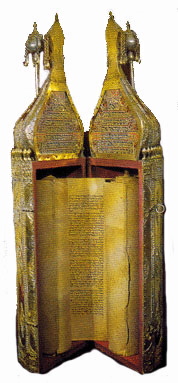
Friday we got acquainted with the kibbutz and their rabbi, Yoav, and then shared shabbat with the community. Saturday morning, during services, we got to experience a Sephardic Torah reading, and, to add to the experience, it was the Torah portion I read for my bat mitzvah! A Sephardic Torah looks different on the outside than an Ashkenazi Torah (even though the inside is the same), and it is chanted in a different melody than in an Ashkenazi tradition. It was very beautiful to hear something so different but so familiar.


Ashkenazi Torah
Sephardic Torah--it's read standing, instead of on a table.
Saturday afternoon we spent some time doing some classwork with our teachers; we discussed an article that discussed some of the same topics we had been hearing about throughout the tiyul, but from an academic perspective. Then we got to go swimming in the kibbutz pool (huge success) and then it was time for an interactive tour of the kibbutz (complete with team building and communication exercises), dinner, and a Jewish meditation session. I absolutely love meditation so this was a real treat.

Horses seen on our drive to the kibbutz

Following meditation, it was time to end the trip with havdalah. We started our service with Eili Eili (I wrote about this in my post about Ulpan Break) and then I contributed the following 2 poems, both by Rachel the poet.

To My Country––אל ארצי
I have not sung to you, my country,
not brought glory to your name
with the great deeds of a hero,
or the spoils a battle yields.
But on the shores of the Jordan,
my hands have planted a tree
and my feet have made a pathway
through your fields.

Modest are the gifts I bring you.
I know this, Mother.
Modest, I know, the offerings of your daughter.
Only an outburst of song
on a day when the light flares up
only a silent tear
for your poverty.

And Perhaps--ואולי
And perhaps these things never were
and perhaps
I never rose at dawn to the garden
to work it by the sweat of my brow

Never, not on long and blazing days
long and blazing days of harvest
on top of a cart full of sheaves
I did not raise my voice in song

I never washed in the peaceful azure
and innocence
of my Kinneret
Oh my Kinneret.
Did you exist?
Or did I dream a dream?


After havdalah, it was time to return to Jerusalem. We learned a lot during our time in the North, and it was a refreshing break from the tension of עיר הקודש (ir hakodesh--the Holy City).

Pre-shabbat sunset on the kibbutz

Now that we're back in J'lem, nothing has slowed down at all. We're in our Fall semester now, which means that there are lots of classes to go to, lots of books to schlep, and lots of knowledge to be had. I'm at a point where I'm unable to prioritize my work effectively because I just want to read everything and know everything right away! Never in my life have I ever wanted to do my homework quite like I do now. There are only so many hours in the day, though. And sometimes you have to sleep. Right?

Anyway, life is good here in rabbinical school. I'm learning so much, and I am just so excited to finally be able to start the coursework that I've been dreaming of for so long.

Oh also really quickly yesterday I had orientation for the volunteer project I'll be doing this year--I'm going to be in Mevasseret Zion once a week volunteering with the Ethiopian immigrants there. We met the staff and a couple of families yesterday, and I can already tell it's going to be an incredible experience! I'm excited to really get started there, but, like a lot of things in Israel, it will have to wait until אחרי החגים (acharei hachagim--after the high holidays) so I'll be going back in October.

I hope this post makes sense--it's been (like always) a really busy couple of weeks, but I'm trying to process through the chaos and let these incredible experiences really sink in. Thanks for reading!


Sunday, September 4, 2011

First REAL Day of Rabbincal School!

Hi everyone!

Today was a really awesome amazing inspiring day. After months (years) of waiting, today I finally really started rabbinical school. Summer ulpan was kind of a tease; I think it was really a way to help everyone transition back into school mode. That being said, today we started our real fall semester.

The morning started out with Bible. It looks like all of my non-history classes are going to be taught in Hebrew, which will be challenging but thanks to my Hebrew major from The Ohio State University (we beat Akron 42-0 last night, O-H!) I'm pretty used to classes being taught in Hebrew. My teacher for Bible seems really amazing, and I can't wait to learn with him! After Bible I went to Modern Hebrew, which is basically like a continuation of ulpan. While I miss my ulpan teacher Osnat, today I started learning with Zohara, who seems totally awesome. She's energetic and passionate about Hebrew, and I really think I'm going to get a lot out of that class. After a quick break we all joined together in the auditorium for 2nd Temple History with David Levine. He rules. I thought the lecture was really interesting and I'm excited especially because this semester we're going to get to learn about Qumran (Dead Sea Scrolls) and I think that will be great because I took a quarter long translation class of the DSS and LOVED it. Then we had a quick lunch break, and then mincha (our afternoon service). I thought mincha was really great today. We have such a musical class, and it's nice that people aren't shy with harmonies because every service we have together is beautiful. After mincha, the three types of students split up. Let me explain: for most of our classes (Bible, Modern Hebrew, Classical Hebrew Grammar, Liturgy, etc) we're split up by Hebrew level, so for the most part my classes are with the exact same 11 people I had ulpan all summer with. In my program there are rabbinical students, cantorial students, and education masters students. So, in the afternoon, the ed. students go to their seminar, cantorial students have special sessions, and rabbinical students joined together with the hilarious Rabbi Michael Marmur for a mini-course on Reform Judaism. He is an absolute riot and I'm glad to have him as a teacher.

All in all it was a really incredible day!

The only snag is that I still have two finals from summer session still to do. But, I'm channeling my inner mustache (have I told you guys how awesome my archaeology teacher's mustache is? Because it is EPIC) and trying to learn as much as I can before the exam on Wednesday.

Thus, tonight it's a short blog. I just wanted to share with everyone how excited and inspired I am to finally be starting what I've dreamed of for so long! =)